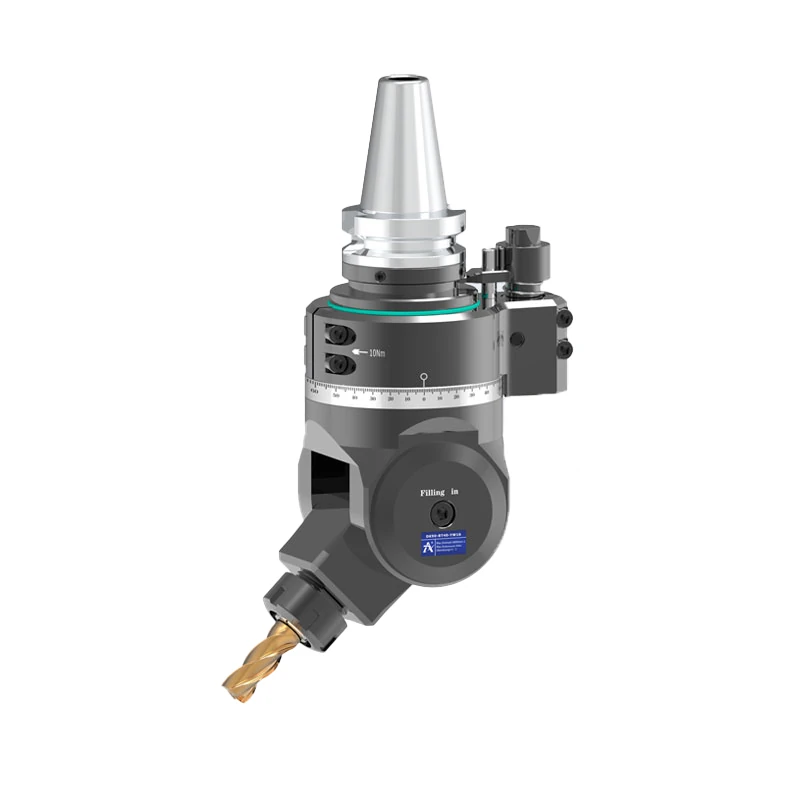
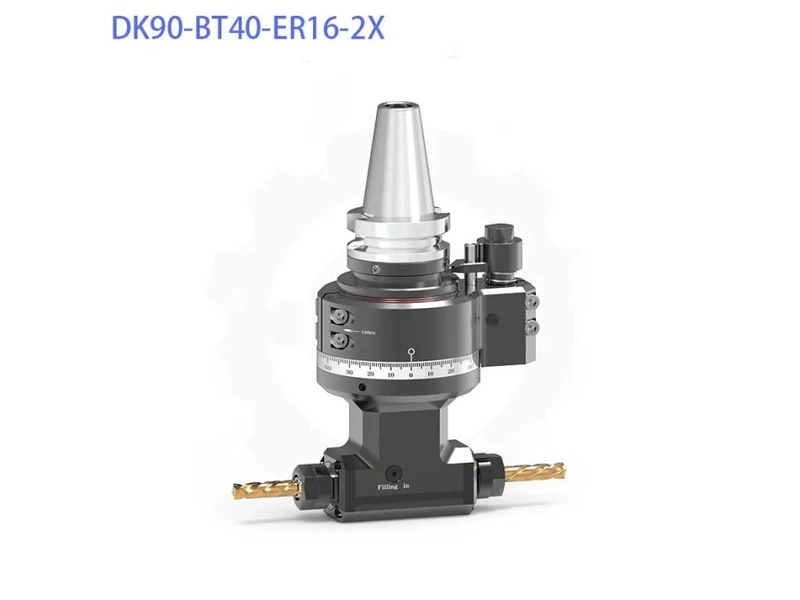

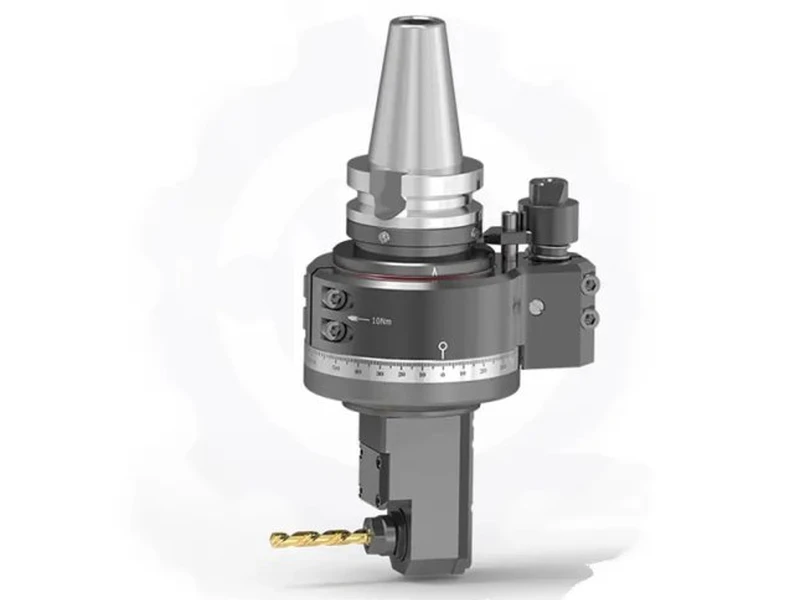
In CNC machining, the small details often decide whether a job is profitable or scrapped. One of those details is the collet nut. If you run a BT40 vertical machining center and machine deep cavities, ribs, or narrow internal features, you have probably faced a clearance problem that a standard ER Collet nut cannot solve. That is where the ER mini nut comes in.
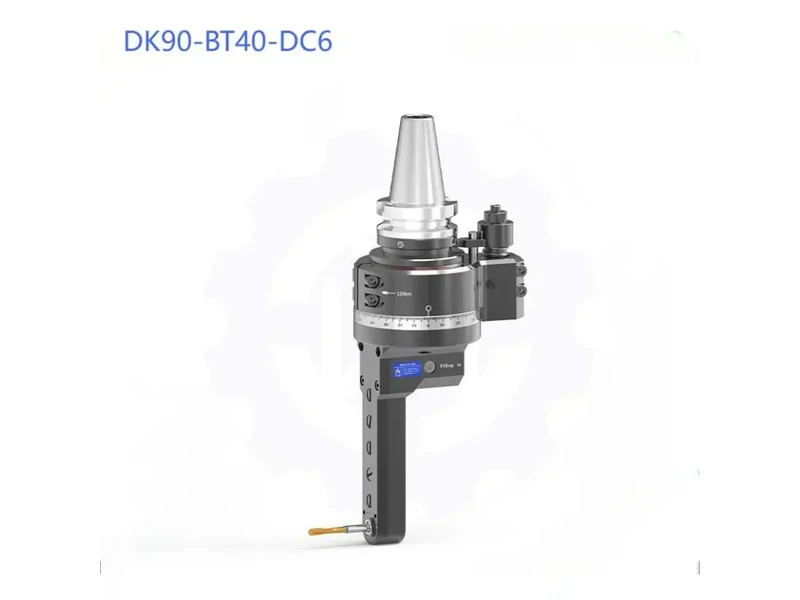
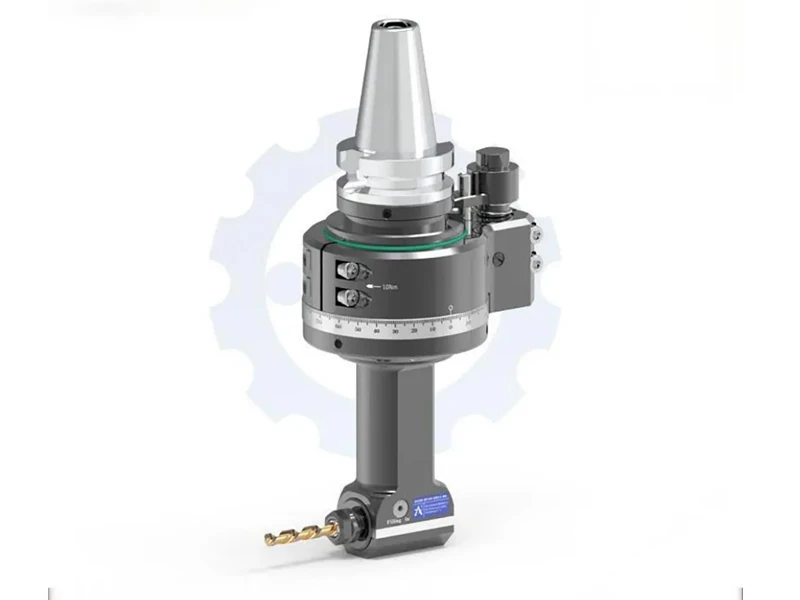
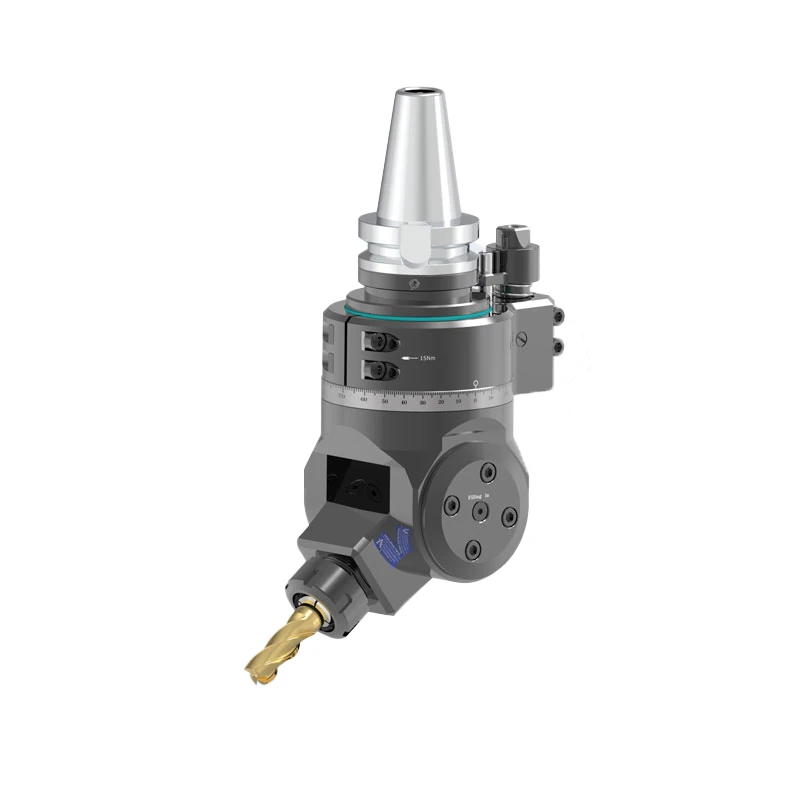
This article explains the real difference between an ER mini nut and a standard ER collet nut, when to use each, and how a 90 degree angle head built around mini-nut spindles opens up machining possibilities that standard right angle head designs cannot reach. Taking BOD’s DK90-BT40 ER Mini Nut Series as an example, we’ll look at its design, specifications, and practical applications in detail.
What Is an ER Collet Nut and Why Does It Matter?
An ER collet nut threads onto the spindle of an ER collet chuck. Its job is simple but critical: it compresses the collet around the tool shank and locks it in place during cutting.
How the Nut Locks the Tool Inside an ER Collet
When the nut is tightened, its internal taper pushes the collet into the spindle taper. The collet slots close evenly around the tool, creating clamping force along the full contact surface. A clean thread, accurate taper, and balanced nut body all contribute to low runout and stable high-speed rotation.
Standard ER Nut vs ER Mini Nut: Shape and Size Difference
A standard ER nut has external wrench flats or a hexagonal shape. These flats are necessary for tightening but add to the outer diameter. An ER mini nut, often called an M-type nut, removes those protruding flats. The result is a smaller, rounder profile. The clamping function remains the same; only the external shape changes.
Physical Design: What Makes the ER Mini Nut Slimmer
The mini nut is not just a shorter version of a standard nut. Its geometry is intentionally different.
No External Wrench Flats
Standard nuts require open-end or hook wrenches that grip flat surfaces. Mini nuts use a different tightening method and do not need those flats. Removing them eliminates the largest radial protrusion on the spindle nose.
Smaller Outer Diameter for Tight Access
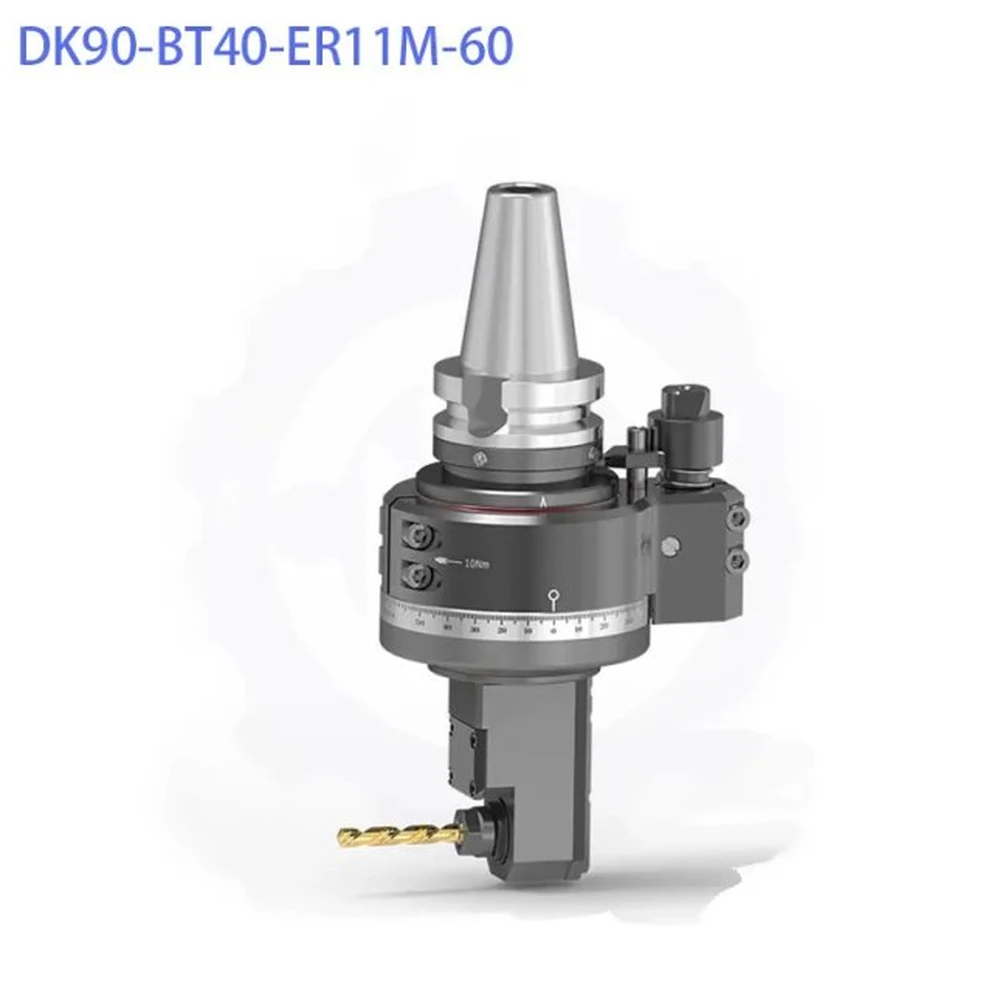
On the DK90-BT40 ER11M cnc angle head, the reduced nut profile helps bring the overall passing diameter down to D55 mm. Compared with conventional right angle head designs, this can shrink the maximum swing clearance by up to 35%. That difference is what lets the head enter narrow slots and deep internal walls.
Better Dynamic Balance at High RPM
The compact, symmetrical shape of a mini nut is naturally better balanced. In the field, this supports stable cutting at speeds up to 12,000 RPM, reducing chatter marks and improving internal wall finish in deep cavity work.
Performance Trade-Off: Mini Nut vs Standard Nut
Choosing between the two is not about which is “better.” It is about matching the nut to the workpiece and cutting strategy.
Clamping Force and Tool Capacity
Mini nuts clamp ER collets the same way standard nuts do. The DK90-BT40 series covers ER11M through AER25M, with clamping ranges from Ø1.0 mm to Ø16.0 mm and tapping capacity up to M14. For finish passes, light profiling, and internal tapping, the clamping force is fully adequate.
Best Fit: Finishing vs Heavy Roughing
Mini nut angle heads excel in space-limited finishing. Their slim profile gets the cutter where a standard head cannot. For heavy roughing with large stock removal, a standard nut on a larger, more open bt40 angle head may still be the safer choice because the bigger outer body provides more room for chip evacuation and higher torque absorption.
Product Focus: DK90-BT40 ER Mini Nut Series
The DK90-BT40 ER Mini Nut Series is a slim, deep-reach 90 degree angle head built for BT40 vertical machining centers. It uses low-profile mini-nut collet spindles to reduce the overall swing diameter while maintaining rigidity for long-reach operations.
Overview of the Slim 90 Degree Angle Head
The series is designed for narrow-clearance side milling, deep cavity drilling, and internal bore tapping. Projection lengths reach up to 210 mm, and the high-rigidity body supports single-setup multi-face machining on complex mold bases and aerospace structural frames.
ER11M / ER16M / ER20M / AER25M Model Range
Models are organized by spindle output and gage length. ER11M units offer the smallest profile, while AER25M units handle larger tools up to Ø16.0 mm.
Key Technical Data: Passing Diameter, Speed, Torque
| Model | Clearance Diameter | Speed | Clamping Range | Tapping Range | Max. Torque |
| DK90-BT40-ER11M-60/100/140/210 | D55 mm | 6,000 RPM | Ø1.0–Ø7.0 mm | M5–M6 | 8.8 Nm |
| DK90-BT40-ER16M-100/170 | D76–D77 mm | 8,000 RPM | Ø1.0–Ø10.0 mm | M5–M10 | 35.0 Nm |
| DK90-BT40-ER20M-100/150/180 | D85 mm | 6,000 RPM | Ø1.0–Ø13.0 mm | M5–M10 | 30.0 Nm |
| DK90-BT40-AER25M-100/150 | D95 mm | 6,000 RPM | Ø1.0–Ø16.0 mm | M6–M14 | 46.0 Nm |
All standard models are always in stock.
Case Example: Deep Mold Cavity Side Milling
A mold shop needed to side-mill the internal walls of a narrow, deep cavity. The standard angle head was too large to enter the cavity, so the side faces could not be finished in one setup. By switching to a deep-cavity cnc angle head with a mini ER spindle and ER mini M nut, the head profile shrank enough to enter the pocket, complete the side-wall finishing in a single clamping, and maintain surface finish at high speed.
This is a hard space constraint where only the slim head-and-nut combination works. It is ideal for precision finishing, not heavy stock removal.
Build Quality Behind the Series
The mechanical design of the DK90-BT40 series focuses on rigidity, accuracy, and long service life.
QT500-7 High-Rigidity Housing
The main body shell is made from QT500-7 ductile iron casting. This material offers high rigidity, good damping, and stable accuracy over time, outlasting lower-cost housings in demanding temperature conditions.
OKAMOTO Ground Spiral Bevel Gears
Power is transmitted through OKAMOTO precision ground spiral bevel gears made from 20CrMnTi alloy steel. The gears are carburized and quenched to HRC 58–62, ground to ISO Grade 4 precision, and deliver backlash ≤ 15 arcmin with operational noise ≤ 70 dB under full load.
P4 Class Bearings and Runout Control
The spindle is supported by preloaded P4 class angular contact ball bearings from NSK/FAG. Spindle nose runout is held to ≤ 0.005 mm. In comparison with low-end domestic angle heads typically rated around 0.02 mm, this series achieves 0.01 mm accuracy, supporting tighter tolerances and better finishes.
Industries That Benefit from Mini Nut Angle Heads
The slim profile and long reach of the DK90-BT40 series make it useful across several manufacturing sectors.
Mold and Die Making
Deep mold bases, slider ribs, and angled ejector pin holes are common challenges. Standard collet nuts collide with the cavity walls, while mini nut heads can reach inside and finish internal side walls.
Aerospace Structural Frames
Narrow aluminum or titanium ribs and frames require side slotting, pocketing, and drilling in tight clearances. The compact cutter envelope of a mini nut angle head fits these geometries.
Automotive Engine and Pump Housings
Complex castings contain lateral internal features, valve pockets, and oil passages. A bt40 angle head with a mini nut spindle can finish these features without repositioning the housing.
Quality, Lead Time, and Shipping
Every DK90-BT40 ER Mini Nut series angle head undergoes a 100% inspection protocol before dispatch. Checks include static and dynamic runout tests, a 60-minute continuous run-in at full rated speed with housing temperature rise ≤ 25°C, and anti-backlash calibration confirmed with angular encoders.
The manufacturing facility is ISO9001:2015 certified. Standard models ship within 5–7 working days. Custom positioning blocks are completed in 15–20 working days. Units are protected with anti-rust oil, vacuum-sealed VCI bags, and EPE foam, then packed in export-grade cartons or ISPM 15-compliant plywood cases. Delivery from Shanghai, Ningbo, or Tianjin ports supports FOB, CIF, EXW, FCA, DDU, and DDP terms, with express air courier service to Europe and North America in 3–5 business days.
FAQ
Can a Mini Nut Match Standard Nut Capacity?
For the clamping ranges and operations listed, yes. Mini nuts use the same ER collet clamping principle. The main difference is the reduced outer profile, not the holding force.
Is the DK90-BT40 Series Good for High-Speed Machining?
Yes. The balanced M-nut design and P4 bearings support stable running at up to 12,000 RPM, making the series suitable for high-speed finishing and light machining.
What Accuracy Can I Expect?
Spindle nose runout is held to ≤ 0.005 mm, and accuracy is controlled to 0.01 mm. This exceeds the typical 0.02 mm seen on lower-cost domestic alternatives.
Conclusion
ER mini nuts are designed for clearance-critical machining, where standard ER collet nuts may limit access to deep cavities and narrow internal features. When paired with a slim right angle head such as the DK90-BT40 series, they help improve tool access and enable multi-face machining in a single setup. For BT40 machining centers handling precision finishing in confined spaces, choosing the right mini nut angle head can make a practical difference.
Contact BOD to learn more about the DK90-BT40 ER Mini Nut Series and find a suitable configuration for your machining requirements.
Related Articles
You May Also Like