
Machining angled holes, sloped surfaces, and side features can become difficult when a CNC machine is limited to its standard spindle direction. In many cases, the challenge is not simply cutting the feature, but reaching it without repeatedly repositioning the workpiece.
For manufacturers handling large, heavy, or complex components, repeated setups can increase alignment time and create additional positioning errors. Dedicated angled fixtures can solve some of these problems, but they may also increase tooling costs and make product changeovers less flexible.
A universal angle head provides another approach by changing the direction of the cutting tool while keeping the workpiece in position. This guide explains how a universal swivel milling angle head works, its typical applications, the factors to consider when selecting one, and how a BT50 configuration can fit multi-angle machining requirements.
What Is a Universal Swivel Milling Angle Head?
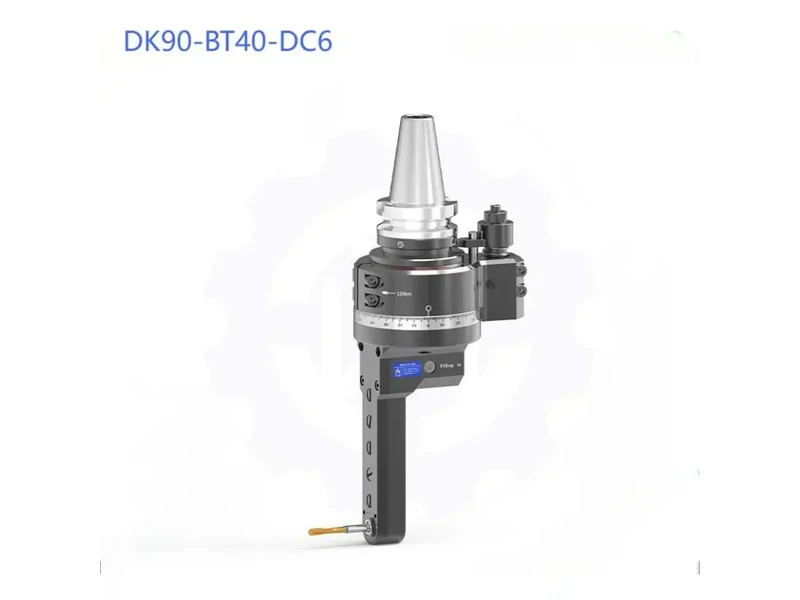
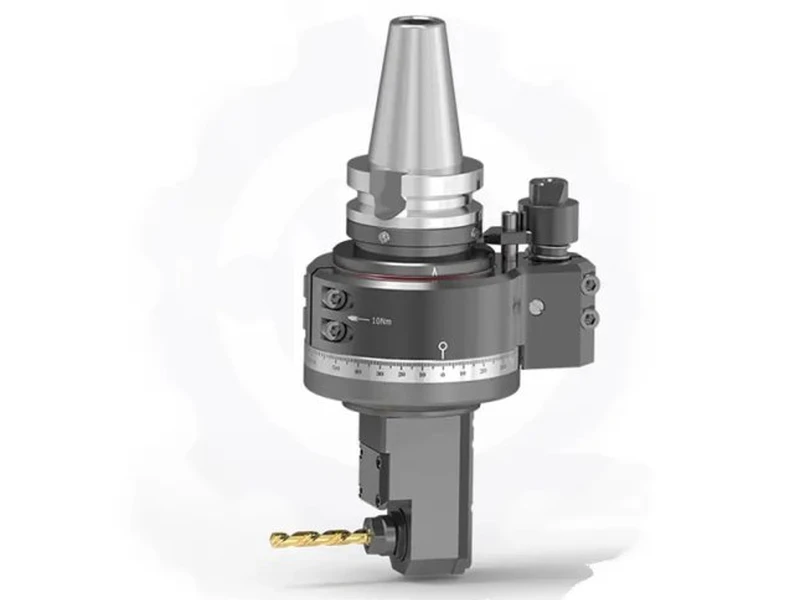
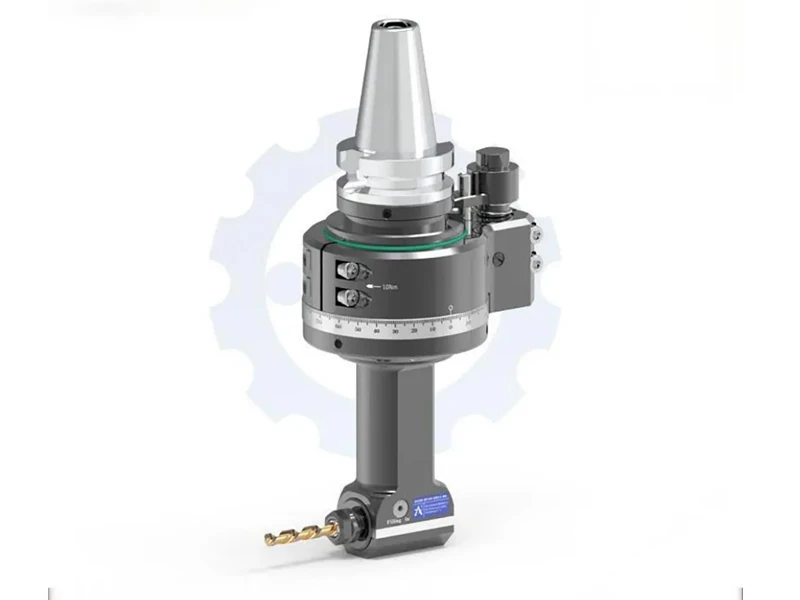
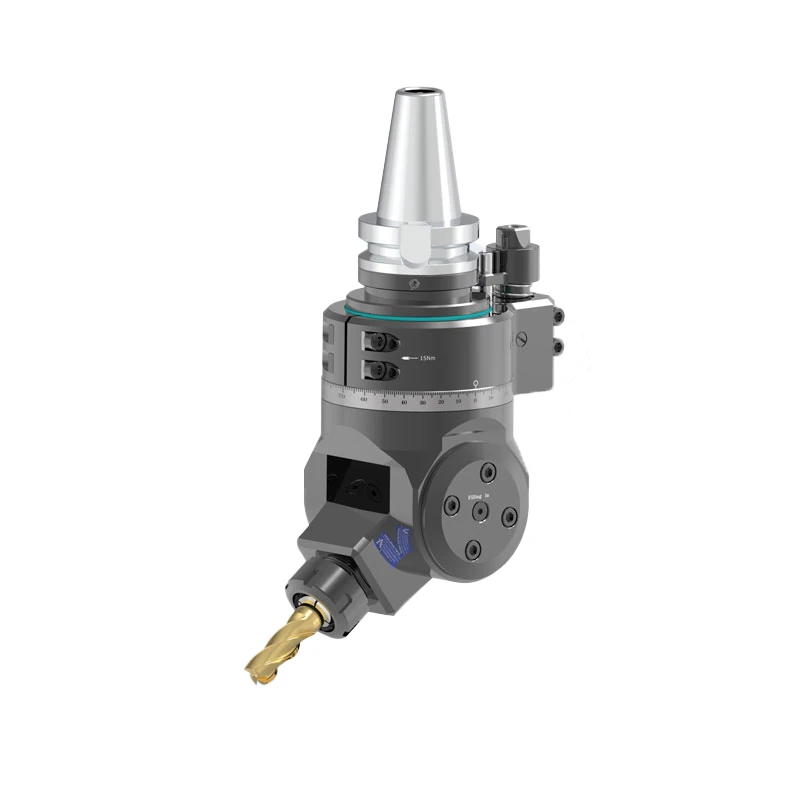
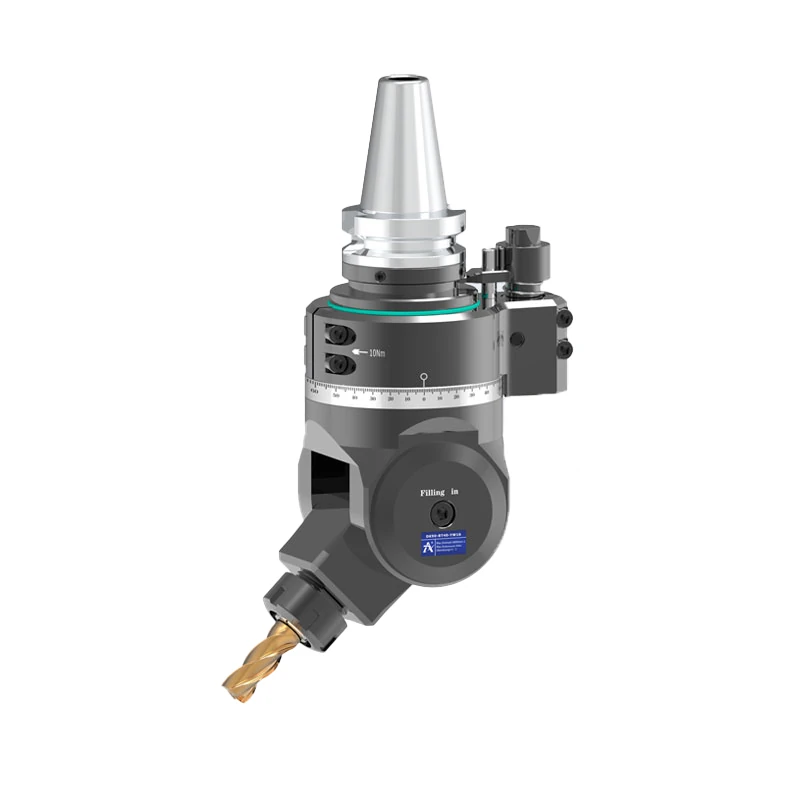
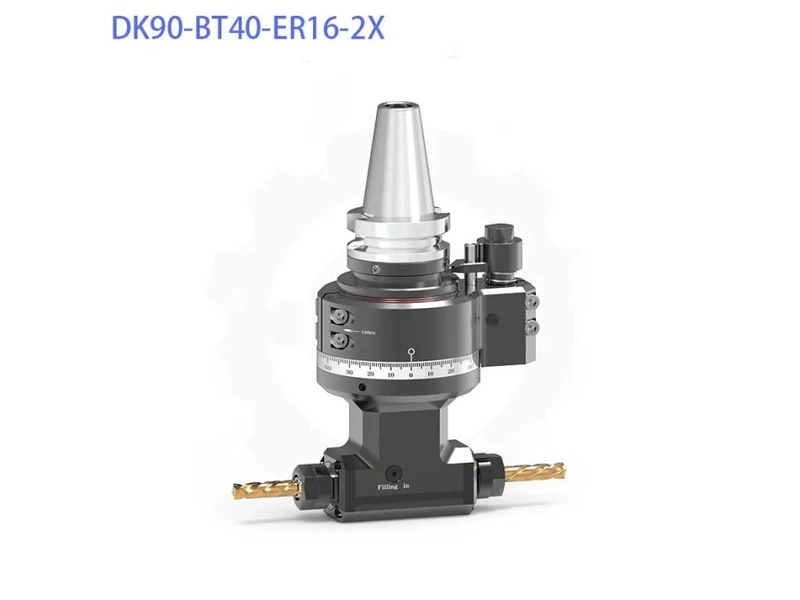
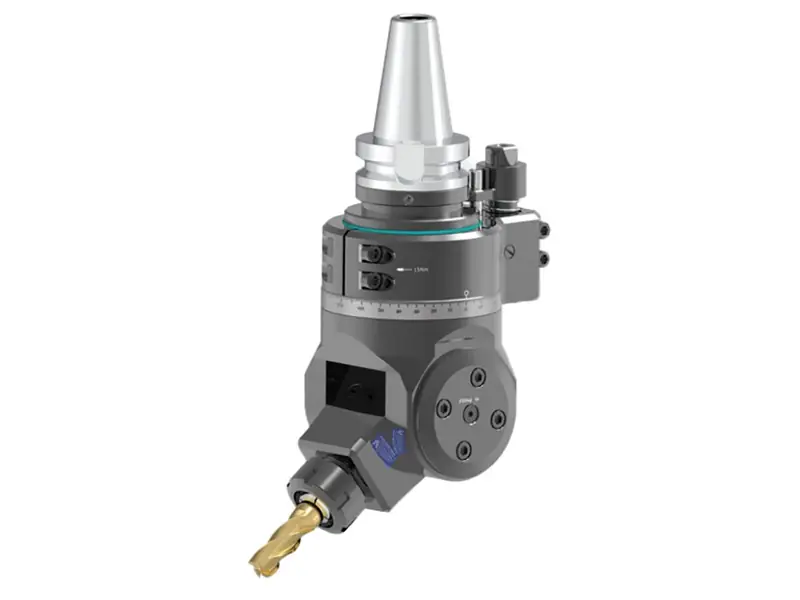
A universal swivel milling angle head is a CNC machine tool attachment that changes the orientation of the cutting tool relative to the machine spindle. Unlike a fixed-angle attachment, a universal design allows the spindle housing to be adjusted and locked at different angles.
This makes the attachment useful for machining features that cannot be easily reached from the machine’s standard spindle direction. Depending on the configuration and tooling, typical operations include angled drilling, sloped surface milling, side machining, and tapping.
The main purpose is not to replace the CNC machine itself, but to provide additional tool access for machining features at different orientations.
How Does a Universal Angle Head Work?
The machine spindle provides the input rotation, while the angle head’s internal transmission system transfers this motion to an output spindle positioned at the required orientation.
The swivel mechanism allows the output direction to be adjusted according to the feature being machined. Once the required position is established, the housing is locked before machining.
Because the attachment changes the tool direction rather than the workpiece position, it can be useful when several features on one component require different machining orientations.
Key Features of a Universal Milling Angle Head
When evaluating a milling angle head, buyers should look beyond the adjustable angle itself. The housing, transmission, spindle support, tool interface, and overall rigidity all influence how the attachment performs during machining.
Adjustable Swivel Angle for Multi-Angle Machining
The key function of a universal angle head is its adjustable spindle orientation. The housing can be positioned according to the machining requirement and locked before cutting.
This allows one attachment to handle different angular operations rather than being limited to one fixed machining direction.
For production environments with multiple angled features or changing workpiece geometries, this adjustability can provide greater process flexibility.
High Rigidity and Stable Cutting Performance
Rigidity is particularly important when the angle head is subjected to cutting forces. A rigid housing and stable internal structure help maintain the relative position between the machine, attachment, and cutting tool during machining.
This becomes increasingly important for heavier cutting operations, larger workpieces, and applications where dimensional consistency is required.
Precision Power Transmission
The internal gear system needs to transfer spindle power reliably while maintaining the required relationship between the input and output spindles.
For buyers, transmission accuracy, backlash, gear material, heat treatment, and manufacturing precision are useful indicators when comparing different angle heads.
Spindle Accuracy and Bearing Support
The output spindle directly affects tool positioning and machining accuracy. Bearing configuration and preload therefore deserve attention when selecting an angle head.
A high-precision spindle support system can help maintain stable rotation and control runout under machining loads.
What Are the Applications of a CNC Angle Head?
Multi-angle machining requirements can be found across several manufacturing sectors. Based on the supplied industry distribution, the main application areas are automotive manufacturing, mold manufacturing, and aerospace.
Automotive Manufacturing
Automotive components can contain holes, surfaces, and other features that require access from different directions.
A CNC angle head can provide an alternative machining direction when the standard spindle orientation does not offer sufficient access. This can be particularly useful when changing the workpiece position would add unnecessary setup operations.
Mold and Die Manufacturing
Mold and die production often involves complex surfaces and features that are not aligned with the machine’s standard spindle direction.
Typical applications include sloped core surfaces, angled slider channels, and compound ejector pin holes. For larger mold bases, reducing repeated repositioning can simplify the machining process.
Aerospace and Other Precision Machining
Aerospace components can contain complex structural features that require machining from different directions. Aluminum and titanium components may therefore require flexible tool access for certain milling operations.
Similar requirements can occur in heavy machinery and energy equipment, including angled drilling, slotting, and thread milling on large housings and frames.
Universal Angle Head vs. Conventional Angle Machining Methods
A universal angle head is one of several approaches to angled machining. The appropriate method depends on the workpiece, machine configuration, feature geometry, production volume, and required accuracy. The following comparison highlights the main differences between conventional angled machining and an adjustable angle head approach.
| Comparison Factor | Conventional Angle Machining | Universal Angle Head Approach |
| Workpiece Setups | Different angled features may require the workpiece to be removed, repositioned, and indicated again. | The tool direction can be adjusted within the available angular range while the workpiece remains in the same setup. |
| Positioning Error | Repeated repositioning and alignment can increase the potential for accumulated positioning errors. | Fewer setups can help reduce errors associated with repeated repositioning. |
| Custom Fixtures | Some applications require dedicated fixtures to hold the workpiece at a specific angle, adding tooling costs. | An adjustable angle head provides another option for machining angled features and may reduce the need for dedicated angled fixtures. |
| Product Changeover | Product changes may require existing dedicated fixtures to be modified or redesigned. | Adjustable tool orientation can provide more flexibility when machining features at different angles within the available range. |
| Multi-Angle Machining | Different angular features may require separate setups or tooling arrangements. | Multiple angular features can be processed by adjusting the tool orientation while maintaining the workpiece setup. |
| Large Workpieces | Repositioning and realigning large workpieces can be time-consuming and inconvenient. | Reducing the need to reposition the workpiece can simplify machining operations on large components. |
For manufacturers handling multiple angular features, frequent product changes, or large workpieces, the main consideration is not simply whether an angle head can create a specific angle, but whether it can reduce setup complexity while providing the required machining access and accuracy.
How to Choose the Right Angle Milling Head?
Selecting the right angle milling head requires matching the attachment to both the CNC machine and the actual machining process.
Check the Machine Tool Interface
Start by confirming the machine spindle interface. Common interfaces include BT50, BBT50, SK50, CAT50, and HSK configurations.
The attachment must be compatible with the machine spindle and automatic tool changing system. Available installation space and interference with the machine or workpiece should also be checked before purchase.
Match the Spindle Output and Tool Size
The output spindle and collet system determine which cutting tools can be used.
For example, ER25 and ER32 provide different clamping ranges. The required tool diameter should therefore be confirmed before selecting the output configuration.
Tool length and surrounding clearance should also be considered because the attachment changes the position of the cutting tool relative to the machine spindle.
Consider Torque and Maximum Speed
Torque and maximum speed should be evaluated according to the actual cutting operation rather than considered separately.
Heavy cutting may require higher available torque, while smaller tools or different machining operations may place greater importance on rotational speed.
The selected specifications should therefore correspond to the cutter diameter, material, cutting conditions, and required machining process.
Check the Required Machining Angle and Clearance
The required machining angle is only one part of the selection process. The attachment must also provide sufficient clearance around the workpiece.
Before purchasing, check whether the adjusted spindle position can reach the target feature without the angle head, tool, or housing interfering with the workpiece or machine structure.
Consider Accuracy, Rigidity, and Service Life
For production applications, accuracy and durability can directly affect process consistency and operating cost.
Buyers should compare spindle runout, transmission backlash, housing rigidity, bearing configuration, and expected service life rather than evaluating the attachment based only on its purchase price.
BT50 ER32 Universal Angle Head: DK90-BT50 YW & WXER Series
For BT50 machining centers, the DK90-BT50 YW & WXER Series provides an adjustable universal angle head configuration for multi-angle machining. The series includes DK90-BT50-YW16, DK90-BT50-YW20, and DK90-BT50-WXER32.
The housing is made from QT500-7 ductile iron, with artificial aging and stress-relief heat treatment. The design focuses on high rigidity, precision, and long service life.
The internal transmission uses OKAMOTO precision-ground spiral bevel gears made from 20CrMnTi alloy steel. The gears are carburized and quenched to HRC 58–62 and ground to ISO Grade 4 precision. The specified transmission backlash is ≤15 arcmin.
The spindle assembly uses preloaded P4-class angular contact ball bearings from NSK/FAG. Spindle nose runout is specified at ≤0.005 mm under heavy radial and axial cutting loads.
| Model | Output | Max. Speed | Clamping Range | Max. Torque | Net Weight |
| DK90-BT50-YW16 | ER25 | 6,000 RPM | Ø1–16 mm | 46.0 Nm | 14.15 kg |
| DK90-BT50-YW20 | ER32 | 6,000 RPM | Ø1–20 mm | 65.0 Nm | 19.00 kg |
| DK90-BT50-WXER32 | ER32 | 5,000 RPM | Ø1–20 mm | 65.0 Nm | 13.00 kg |
All three models use a 1:1 gear ratio and CW-CW spindle rotation. The YW20 and WXER32 models support tapping capacities from M6 to M16.
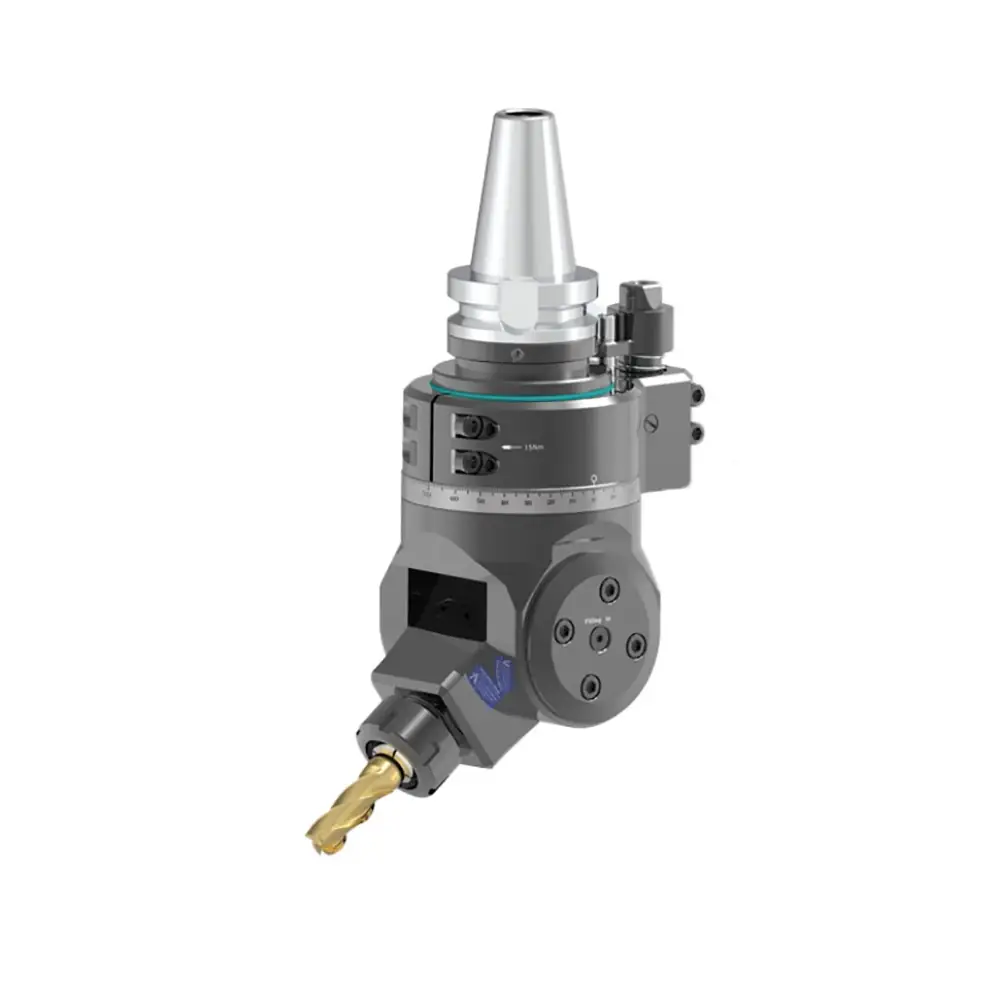
ER32 Clamping Range and Tool Compatibility
The DK90-BT50-YW20 and DK90-BT50-WXER32 use ER32 and support a Ø1.0–Ø20.0 mm clamping range.
For buyers looking for a BT50 ER32 configuration, these models provide a choice between the YW20 and WXER32 configurations based on factors such as maximum speed, weight, and the intended machining application.
Accuracy, Rigidity, and Service Life
The spindle nose runout is controlled to ≤0.005 mm, while the product’s accuracy control can reach 0.01 mm.
The QT500-7 housing provides the specified high-rigidity structure, while the precision gear and bearing system supports stable transmission and spindle rotation.
In terms of service life, the angle head can achieve up to one year of service life, compared with approximately six months for other lower-priced domestic angle heads.
These figures can be used as reference points when evaluating the relationship between machining accuracy, durability, and overall equipment cost.
ISO 9001:2015 Quality Assurance
The product is manufactured under ISO 9001:2015 quality management requirements.
Before shipment, every unit undergoes a 100% quality inspection process. Testing includes angular concentricity and runout measurement, a 60-minute continuous run-in at full rated operating speed, and anti-backlash alignment verification.
Case Study: Machining Angled Features on Copper Electrodes
A precision mold manufacturer needed to machine EDM copper electrodes containing angled holes and irregular side features.
The original process required multiple workpiece setups, changes between angled fixtures, and repeated indicating and alignment. This created positioning errors and increased the risk of damaging the copper workpiece during repeated clamping.
The process also required custom fixtures, resulting in additional tooling costs. Production cycles were long, product changeovers were slower, and machining quality depended heavily on operator experience.
The manufacturer adopted the universal angle head with its existing vertical machining center. The workpiece could then remain in one setup while multiple angled features were machined.
This eliminated positioning deviations caused by repeated setups and reduced the risk of workpiece damage from repeated clamping. It also removed the need for some custom fixture investment and repeated alignment work.
As a result, the machining cycle was shortened, dependence on operator experience was reduced, and product consistency and production flexibility were improved without purchasing a five-axis machine.
Frequently Asked Questions About Universal Angle Heads
What Is a Universal Angle Head Used For?
A universal angle head is used to change the cutting tool direction for operations such as angled drilling, sloped surface milling, side machining, and tapping.
Can an Angle Head Be Used on a 3-Axis CNC Machine?
Yes. When the machine interface, clearance, tool size, and attachment specifications are compatible, an angle head can provide additional angular machining capability on a three-axis CNC machine.
What Is the Difference Between an Angle Head and a Universal Angle Head?
A universal angle head has an adjustable swivel mechanism that allows the output spindle direction to be changed according to the machining requirement. A fixed-angle head uses a predetermined output angle.
How Do I Choose Between ER25 and ER32?
The choice depends on the required tool diameter and machining conditions. In the DK90-BT50 series, YW16 uses ER25, while YW20 and WXER32 use ER32 with a clamping range of Ø1.0–Ø20.0 mm.
Can a BT50 Angle Head Machine Angled Holes and Side Features?
Yes. A BT50 angle head designed for multi-angle machining can be used for angled holes and side features when the selected configuration provides sufficient tool access and clearance.
Conclusion
A universal swivel milling angle head provides an additional machining direction for CNC processes involving angled holes, sloped surfaces, and side features. Its value lies not only in changing the cutting direction, but also in potentially reducing repeated workpiece setups and improving machining flexibility.
When selecting an angle head, manufacturers should evaluate the machine interface, tool holding system, torque, speed, machining angle, clearance, accuracy, rigidity, and service life together.
For BT50 machining centers, the DK90-BT50 YW & WXER Series offers ER25 and ER32 configurations, with maximum torque up to 65.0 Nm and a QT500-7 high-rigidity housing. The configuration can be selected according to the machine and machining requirements to provide additional multi-angle machining capability for existing CNC equipment. Contact us to discuss your BT50 angle head requirements and find the right configuration for your CNC machining needs.
Related Articles
You May Also Like