
Introduction: Why Spindle Orientation Matters in CNC Machining
In machining, the direction a cutting tool approaches a workpiece matters as much as the tool itself. A standard vertical machining center only delivers spindle power along one axis. When a part needs drilling, tapping, or milling on a side face, the operator has two choices: reposition the workpiece, or change the direction of the cutting force.
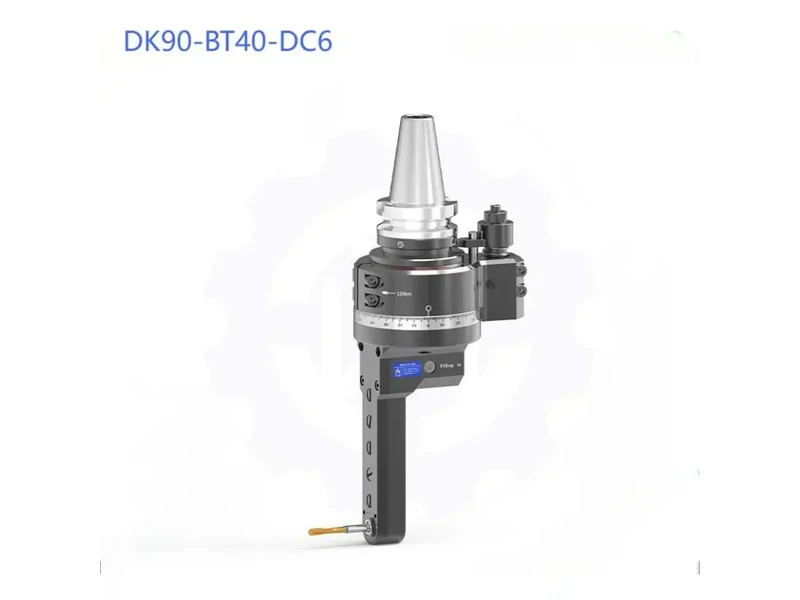
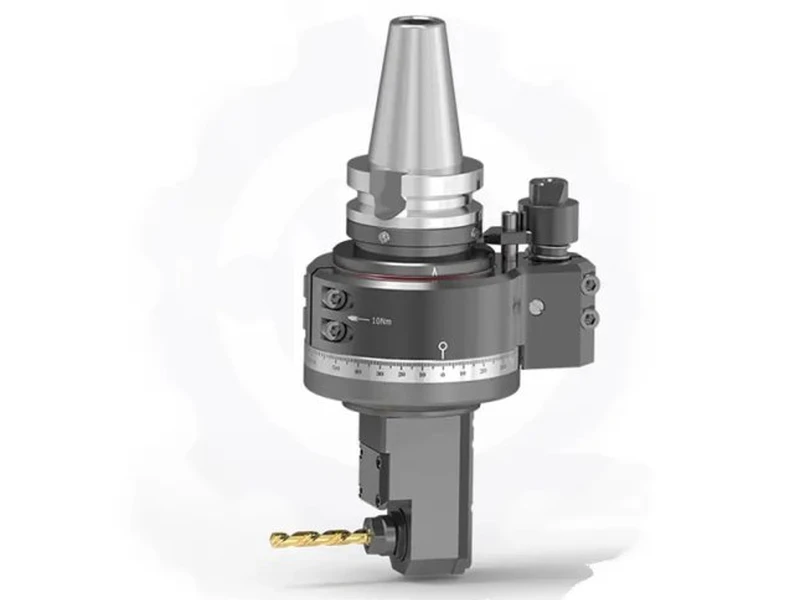
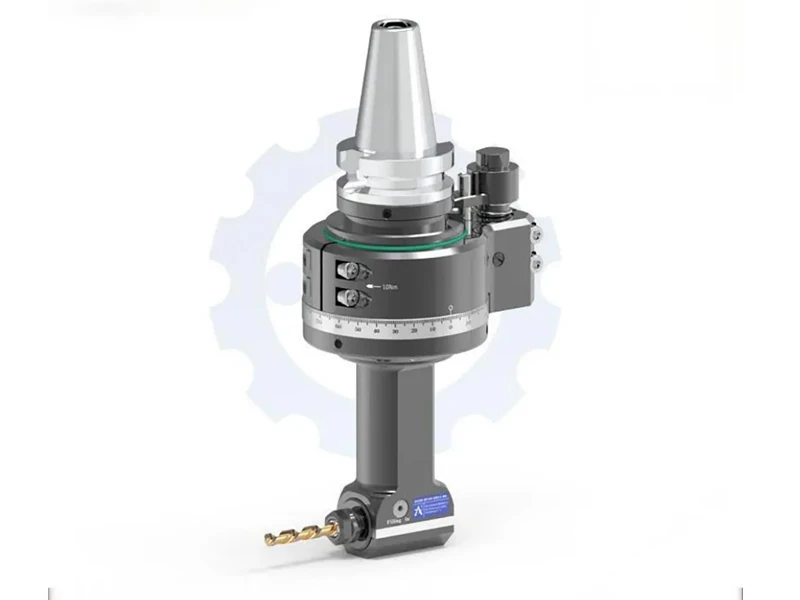
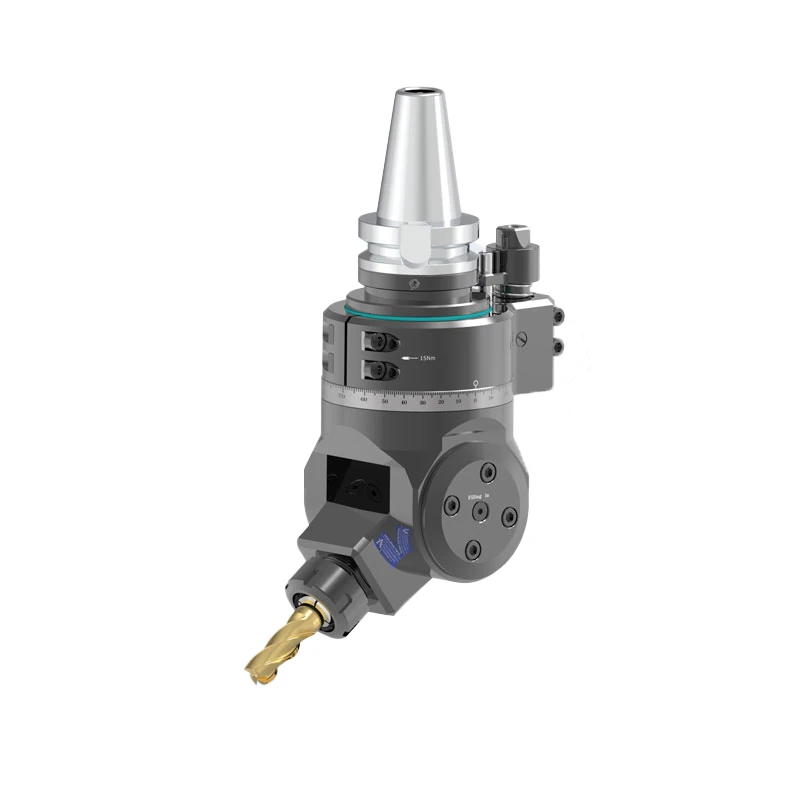
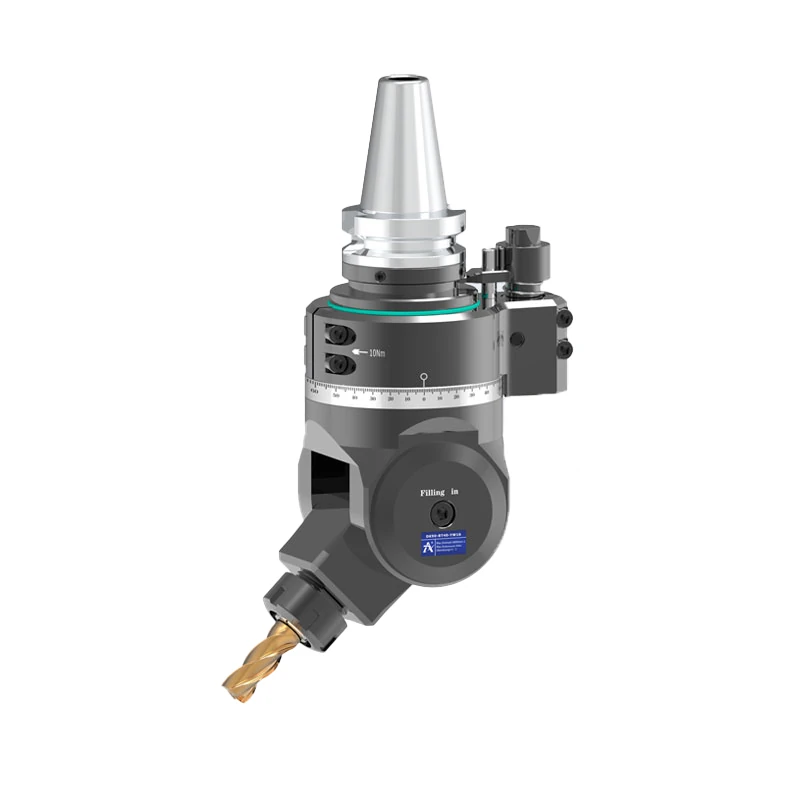
This is where the right angle milling head enters the picture. Also called a 90 degree milling head, this attachment bolts onto the main spindle and redirects rotational drive through a gearbox so the cutting tool points sideways, letting a vertical machine handle vertical, horizontal, and angled features without moving the part.
Within this category, engineers face a specific decision: whether to specify a single-output head or a dual-output head. They share the same purpose but behave very differently on the shop floor — and understanding that difference is the first step toward choosing the right right angle head for cnc mill application.
What Is a Right Angle Milling Head?
A right angle milling head is a precision gearbox attachment that changes the axis of spindle rotation by 90 degrees. It mounts to the machine spindle through a standard taper — commonly BT40 on vertical machining centers — and transmits torque through bevel gears to an output shaft perpendicular to the input.
Its advantage is simple: it expands the capability of an existing machine without buying a new one. A three-axis VMC equipped with an angular head can drill, tap, face mill, and slot on side faces — work that would otherwise demand a five-axis machine or a horizontal machining center. For shops that regularly handle gearbox housings, valve blocks, and other prismatic parts, an angular head for vmc is often the most economical way to add this capability.
The Basic Anatomy of an Angle Head
Every angle head shares the same fundamental building blocks, regardless of output configuration:
- Input shank — the tapered interface that seats into the machine spindle (BT40 is most common, with SK40 and HSK63A also used).
- Gear transmission — bevel gears that redirect the rotational axis; gear quality directly determines accuracy, backlash, and service life.
- Output spindle — the rotating nose that holds the cutting tool, usually through an ER collet or a face mill arbor.
- Housing (casing) — the rigid body that holds everything in alignment and absorbs cutting forces.
- Bearings — precision bearings supporting the output spindle and controlling runout.
Single Output vs. Dual Output: The Core Difference
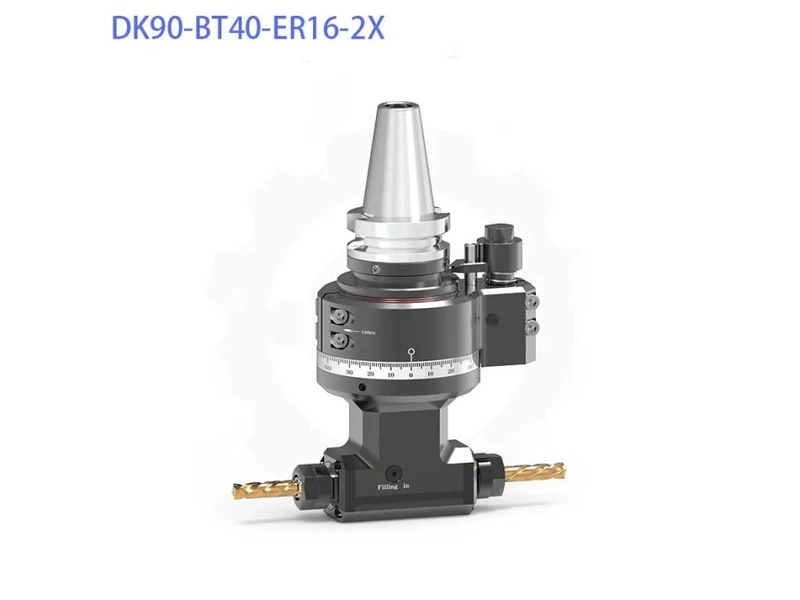
The defining distinction is straightforward. A single-output right angle head has one output spindle, with the tool axis perpendicular to the machine spindle. A dual-output (double-sided) angle head carries two output spindles on opposite sides of the housing, positioned 180 degrees apart. This one design choice changes how the tool is used in three practical ways:
1. How many tools it can hold at once. A dual-output head mounts two cutting tools simultaneously; a single-output head holds one.
2. How the operator switches between operations. With a dual-output head, the operator indexes the machine spindle or reverses axis motion to bring the opposite output into position, running two sequential operations without a full automatic tool changer (ATC) cycle. A single-output head needs a complete ATC sequence for every tool change.
3. How cutting forces are balanced. Because the two outputs sit on opposite sides, a dual-output head balances radial cutting forces during double-sided milling — one reason it is favored for heavy, simultaneous side-face work.
Why Tool-Change Time Matters More Than Many Shops Realize
On a high-mix production line, non-productive time is often the hidden cost. Every ATC cycle — the spindle stopping, the arm grabbing the tool, the magazine rotating, the next tool seating — is time the spindle is not cutting metal.
For parts that need two operations on opposite internal faces, a conventional setup forces this sequence: machine the first face, change the tool, re-approach, and machine the second face. Each step adds seconds that multiply across thousands of parts — which is where a dual-output bt40 right angle head pays for itself.
Where Each Configuration Shines
Single-output heads are the right choice when the requirement is simply to machine a side face, drill a perpendicular hole, or mill a slot at an angle. They are compact, lighter, and straightforward to set up.
Dual-output heads earn their place when the work involves opposite internal faces, parallel features, or sequential operations that would otherwise demand repeated tool changes and re-clamping — such as drilling and tapping on opposing inner walls of a gearbox housing, or machining parallel ports on a hydraulic manifold.
The choice comes down to one question: does the part require two tools working in opposite directions within a single setup? If so, a dual-output head is usually the faster, more accurate route.
Introducing the DK90-BT40-2X Series Dual Output Right Angle Head
Having covered the general principles, we can now look at a concrete implementation: the DK90-BT40-2X Series, a high-efficiency 90-degree dual-output right angle milling head built for BT40 vertical and horizontal machining centers.
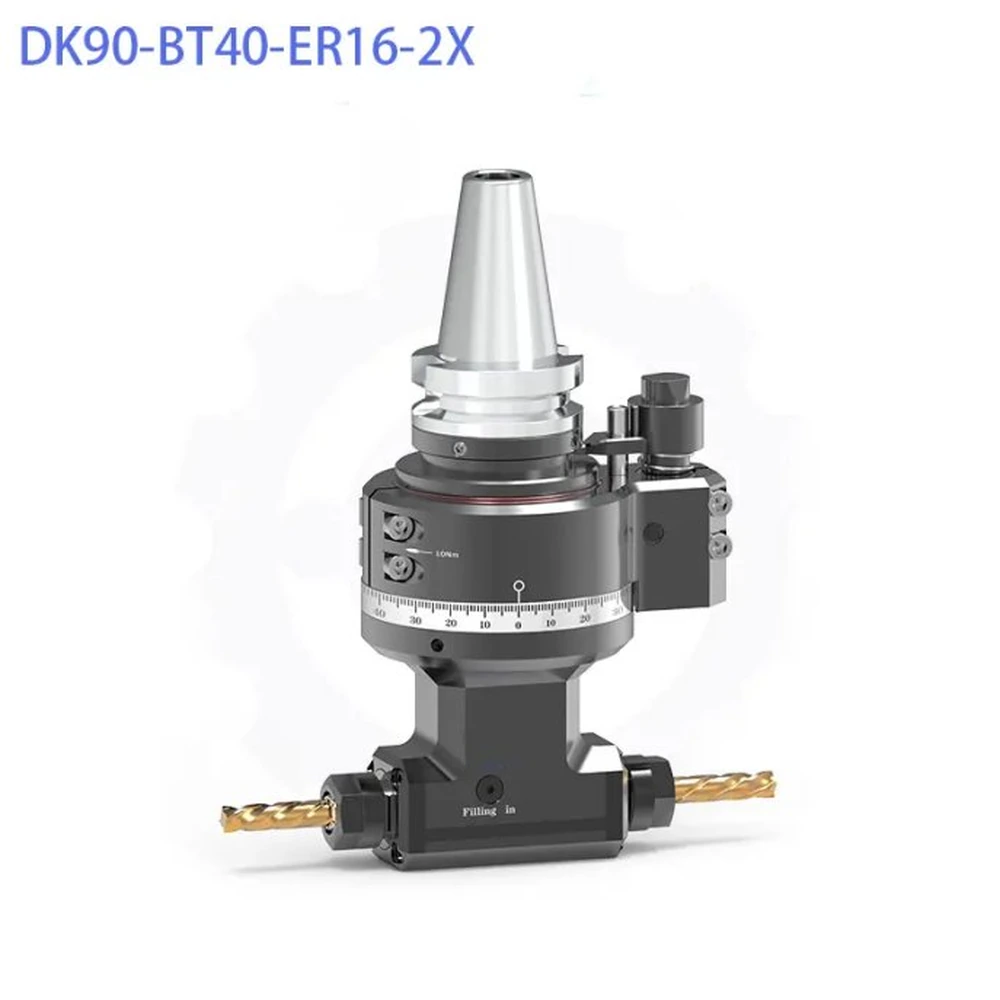
The series comprises four models — ER16-2X, ER25-2X, ER25-2X-125, and F25-2X — all sharing the same double-sided concept: two opposed spindle outputs positioned 180 degrees apart, allowing two cutting tools to be mounted simultaneously (an end mill on one side and a tap on the other, or dual face milling cutters).
Key Technical Features and Material Standards
The DK90-BT40-2X Series is built around several deliberate engineering choices:
- Opposed Dual Spindle Output (180° Configuration): Two collinear spindle outputs on opposite sides of the housing, supporting ER collet clamping (ER16/ER25) or F25 face milling arbor adapters.
- Dual Rotational Direction Options: Standard CW-CW dual rotation, plus a specialized Left: CW-CW / Right: CCW-CW gear train on the DK90-BT40-ER25-2X-125 for right-hand versus left-hand cutting tools.
- Heavy-Duty Monoblock Casing: Cast from high-strength structural iron and stress-relief heat-treated, balancing radial cutting forces during double-sided milling.
- OKAMOTO Precision Ground Bevel Gears: Ground spiral bevel gears in 20CrMnTi alloy steel, carburized and quenched to HRC 58–62 and ground to ISO Grade 4, keeping backlash ≤ 15 arcmin and noise ≤ 70 dB under full load.
- Preloaded Dual Spindle Bearings: Both output spindles run on preloaded P4 class angular contact ball bearings, maintaining spindle nose runout ≤ 0.005 mm on both ends.
Technical Specifications
| Model | Input Shank | Spindle Output | Gage Length (L) | Max. Speed | Gear Ratio | Spindle Rotation | Passing Dia. (D) | Clamping Range | Tapping Capacity | Max. Torque | Net Weight | Stock Status |
| DK90-BT40-ER16-2X | BT40 | ER16 x 2 | 57.5 mm | 8,000 RPM | 1:1 | CW-CW | D132 mm | Ø1.0 – Ø10.0 mm | M6 – M10 | 46.0 Nm | 4.163 kg | Always in Stock |
| DK90-BT40-ER25-2X | BT40 | ER25 x 2 | 66.0 mm | 6,800 RPM | 1:1 | CW-CW | D140 mm | Ø1.0 – Ø16.0 mm | M6 – M14 | 46.0 Nm | 6.900 kg | Always in Stock |
| DK90-BT40-ER25-2X-125 | BT40 | ER25 x 2 | 125.0 mm | 6,800 RPM | 1:1 | Left: CW-CW / Right: CCW-CW | D140 mm | Ø1.0 – Ø16.0 mm | M6 – M14 | 46.0 Nm | 5.850 kg | Always in Stock |
| DK90-BT40-F25-2X | BT40 | F25 Arbor x 2 | Modular | 6,800 RPM | 1:1 | CW-CW | D140 mm | Face Mill Arbor Ø25 mm | M6 – M14 | 46.0 Nm | 6.200 kg | Available upon Request |
A Real-World Application: Aluminum Housing Machining
The value of a dual-output head becomes concrete in a genuine production problem. A machine shop batch-machining aluminum housing parts that require a Ø8 deep hole drill and an M10 tap on both symmetrical side faces.
Under the conventional process, the part had to be clamped twice and turned over between operations — each re-clamping introducing positioning error, extending per-part time, and risking surface damage. After switching to a dual-output angle head, the shop completes both sides in one clamping, with the head on the BT40 spindle, a drill on one output and a tap on the other, at 6,800 RPM.
The result is stable cutting with symmetrical hole positions held within 0.01 mm. Efficiency improved by roughly 50%, scrap rate fell noticeably, and manual part flipping plus secondary positioning were eliminated. The solution has since been applied across multiple housing models, lowering production cost and improving delivery capability.
Quality Assurance and Testing Standards
Performance claims are only meaningful when backed by verification. Every DK90-BT40-2X unit undergoes a 100% quality inspection protocol before dispatch:
- Dual Spindle Runout Inspection: Runout is measured independently on both output tapers, held to ≤ 0.005 mm at the spindle nose and ≤ 0.015 mm at 4D distance on both sides.
- 60-Minute Continuous Run-In: Each unit runs at full rated speed for 60 minutes, with housing temperature rise held to ≤ 25°C above ambient.
- Anti-Backlash Alignment: Gear backlash is verified with angular encoders to remain ≤ 15 arcminutes on both drive ends.
The company operates under ISO 9001:2015 certification, and the monoblock housing is cast from QT500-7 ductile iron — chosen for its rigidity, precision, and long service life.
How the DK90-BT40-2X Series Compares to Budget Alternatives
Buyers often focus on the sticker price, but three differences separate professional heads from low-cost alternatives, and they show up as real costs over time.
Service life. Low-cost angle heads typically last around six months in production use; the DK90-BT40-2X Series is designed for around one year under comparable conditions, and its high-strength casing holds up better under extreme temperature swings.
Accuracy. Budget heads generally control precision to about 0.02 mm; the DK90-BT40-2X Series achieves 0.01 mm — a difference that matters for symmetrical holes and tight tolerance work.
Verification. These figures are enforced through the runout, run-in, and backlash checks applied to every unit before it ships, not left as marketing language.
The practical takeaway: a head that costs less up front can cost far more in rework, scrap, and replacement when it fails mid-production.
Typical Industries and Applications
The dual-output angular head for vmc finds its strongest demand in sectors that machine prismatic parts with features on multiple faces:
- Automotive (43% of typical customers): Sequential drilling, tapping, and spot-facing on opposite internal faces of gearbox housings and cylinder blocks.
- Mold making (39%): Parallel slotting and dual-side mold features, including side milling on opposite sides of mold plates and slider guides.
- Aerospace (12%): Precision machining of complex housings and manifolds requiring tight symmetry across faces.
Hydraulic valve blocks and manifolds are another common fit, with parallel ports and valve seats on opposing inner walls.
Machine Compatibility
The DK90-BT40-2X Series is optimized for medium-to-large vertical and horizontal machining centers. Compatible spindle interfaces include BT40 / BBT40 (face and taper double contact), SK40, and HSK63A, across machine tools from Haas, Mazak, Okuma, Doosan / DN Solutions, Makino, and Hurco.—
Conclusion: Choosing the Right Configuration
A single-output 90 degree milling head is the economical answer when the goal is simply to machine a side face without repositioning the part. A dual-output head is the answer when the part demands two tools working in opposite directions within one setup — and when every second of tool-change time matters.
For shops machining gearbox housings, valve blocks, mold plates, and similar double-sided components, the difference is not academic: it is the gap between two clampings and one, between repeated tool changes and near-continuous cutting, and between a half-year budget head and a year-long workhorse. The DK90-BT40-2X Series embodies this principle with a rigid monoblock casing, ISO-grade ground gearing, and dual P4 bearings. Contact our team to learn more about the DK90-BT40-2X Series and find the right configuration for your CNC machining applications.
Frequently Asked Questions
1. What is the difference between a single-output and dual-output right angle milling head?
A single-output head holds one cutting tool, while a dual-output head holds two tools on opposite sides, allowing two operations within one setup.
2. What applications are suitable for a dual-output right angle milling head?
It is suitable for machining gearbox housings, hydraulic valve blocks, and mold plates that require drilling, tapping, or milling on opposite faces.
3. What is the maximum speed of the DK90-BT40-2X Series?
The maximum speed is 8,000 RPM for the ER16-2X model and 6,800 RPM for the ER25-2X, ER25-2X-125, and F25-2X models.
Related Articles
You May Also Like