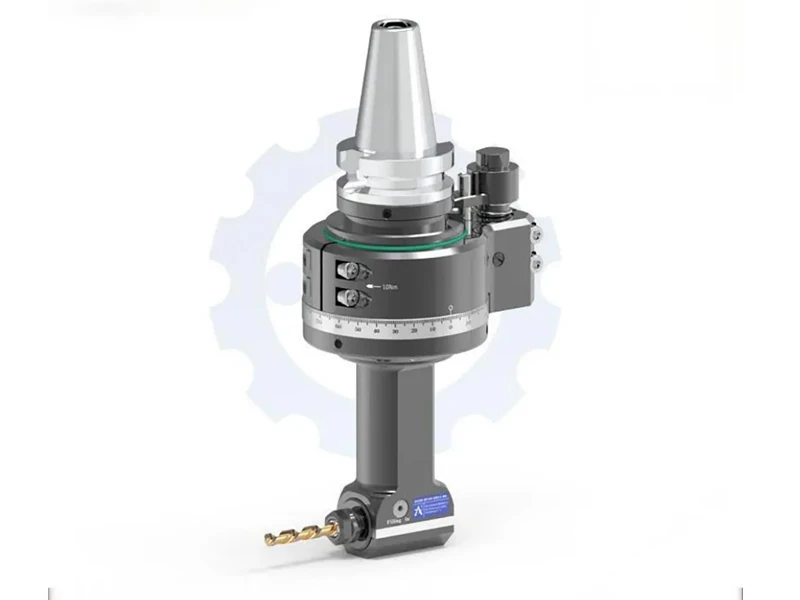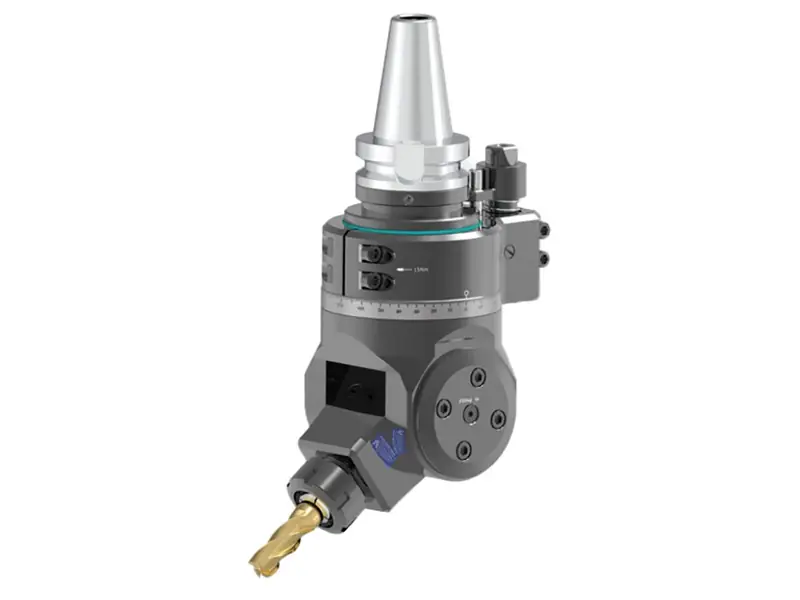
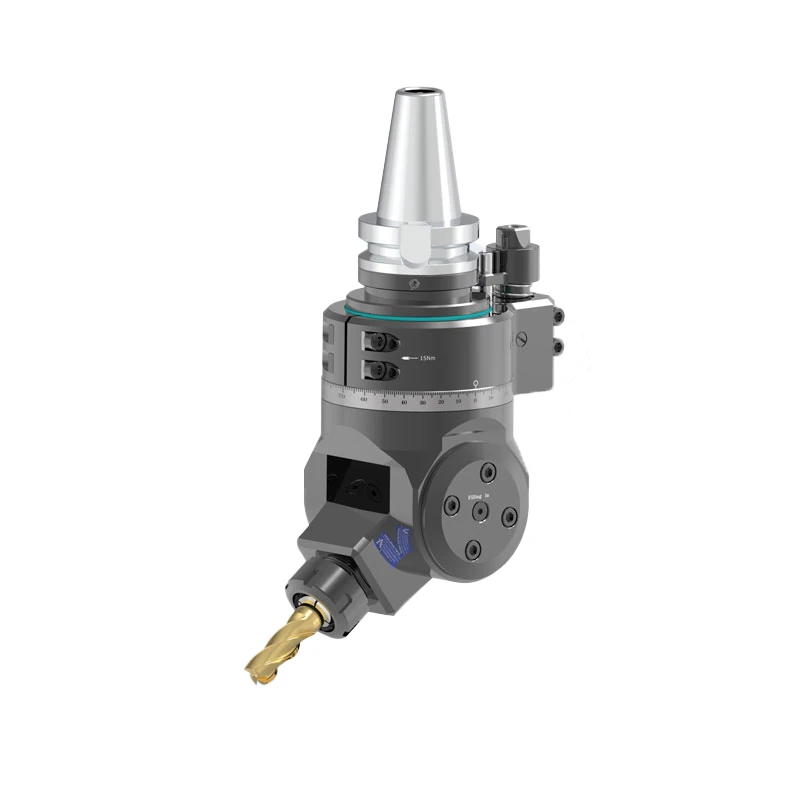
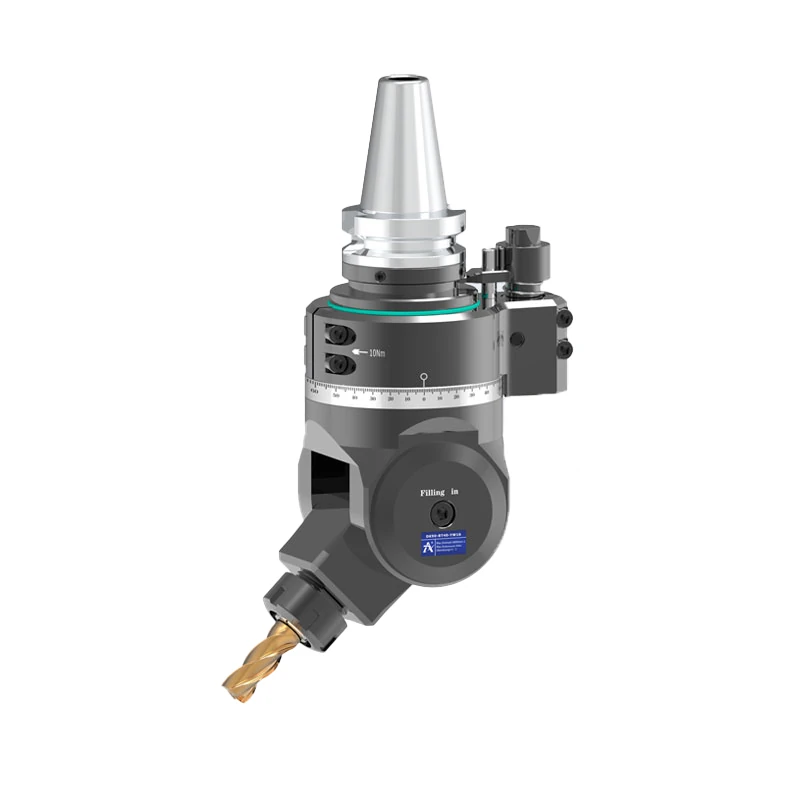
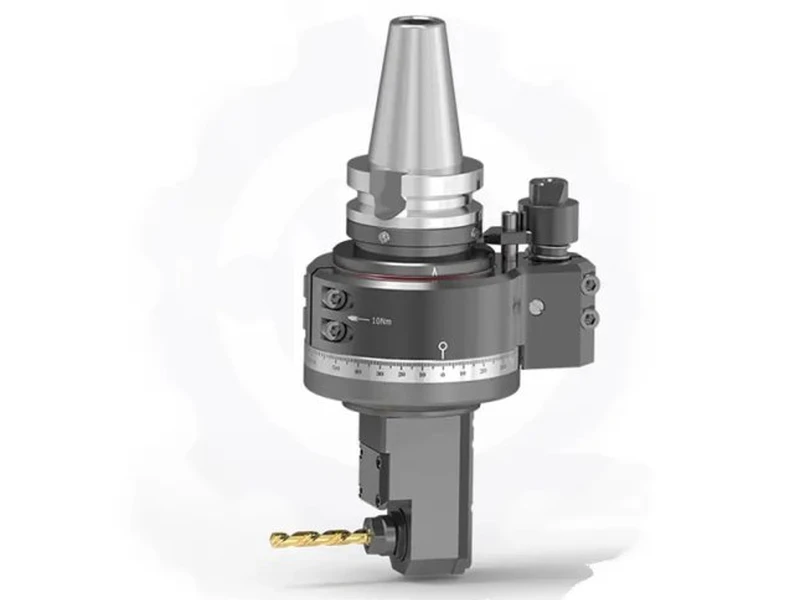

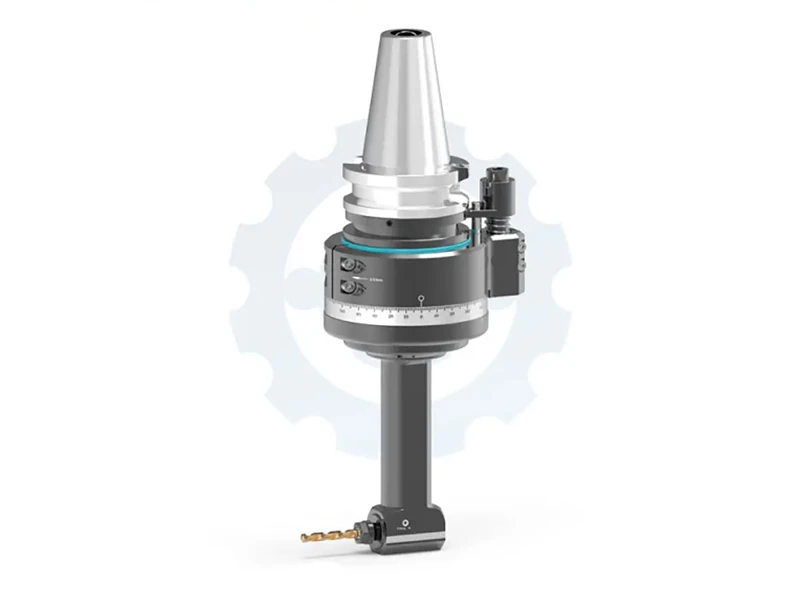
Deep cavities, narrow slots, and internal sidewalls can be difficult to machine when a standard straight tool cannot reach the required area. In these situations, a right angle head can change the cutting direction by 90 degrees, allowing the tool to approach features from the side rather than directly along the machine spindle axis.
For CNC machining operations using BT50 machines, choosing the right angle head involves more than checking the spindle interface. Reach length, head diameter, collet size, rigidity, accuracy, and the machining environment all affect whether the head can access the target feature and maintain stable cutting conditions.
This guide explains the main factors to consider when selecting a BT50 angle head for deep and narrow machining, with the DK90-BT50 ER Mini Nut Series as a product example.
Why Use a Right Angle Head for Deep and Narrow CNC Machining?
A conventional straight spindle setup can have difficulty reaching features located deep inside a workpiece, especially when the cavity opening is narrow. Extending the cutting tool directly from the spindle can also create clearance and tool-overhang problems.
A 90 degree angle head changes the tool orientation so that side milling, drilling, and internal machining can be performed in areas that are difficult to access with a straight tool.
This configuration is particularly useful for applications such as deep internal sidewalls, narrow slots, pockets, valve cavities, and other recessed structures. Instead of relying on multiple setups to reposition the workpiece, an angle head can provide another machining direction while the workpiece remains clamped.
For manufacturers processing complex components, this can be an important consideration when looking to reduce unnecessary repositioning and maintain consistent machining references.
What Should You Consider When Choosing a BT50 Right Angle Head?
The machine interface is only the starting point. A suitable CNC angle head should match the physical space of the workpiece, the required cutting tool, and the machining conditions.
Reach Length and Machining Depth
The first consideration is how far the cutting tool needs to enter the workpiece.
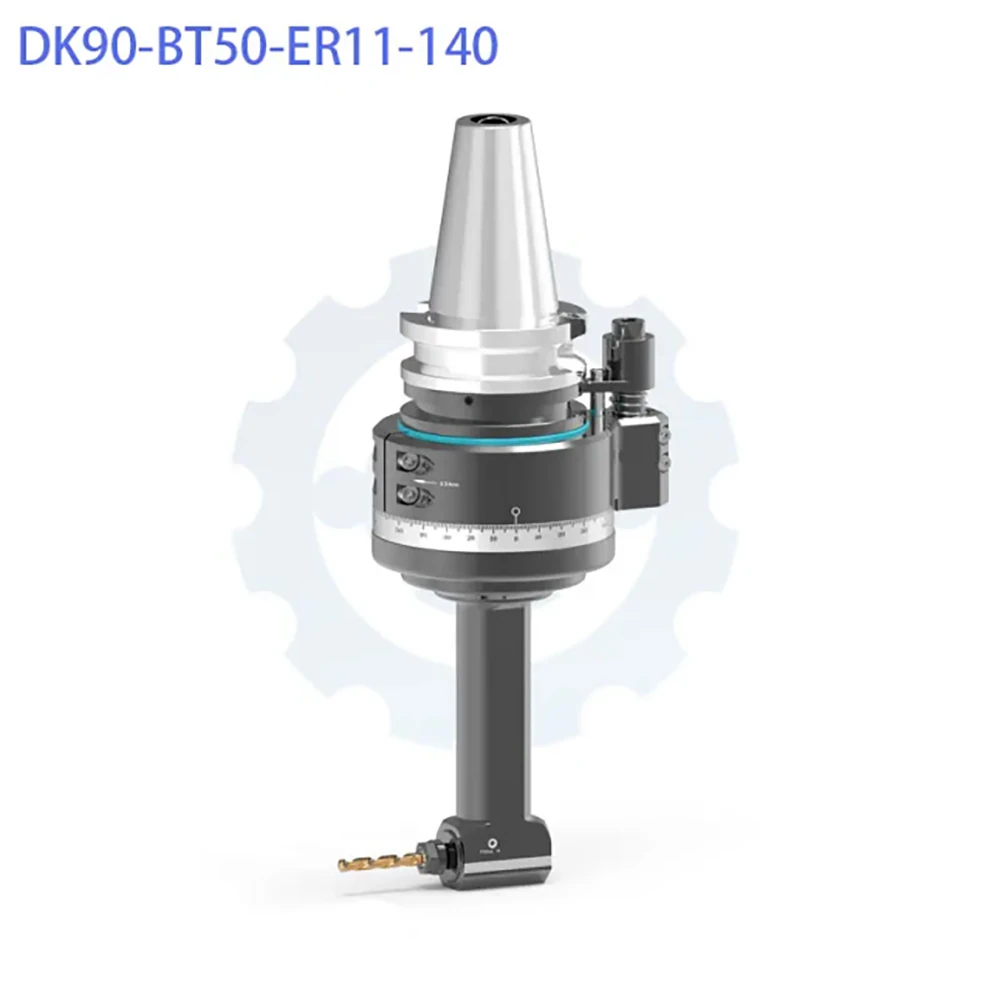
The DK90-BT50 ER Mini Nut Series provides different gage lengths, including 60 mm, 100 mm, 140 mm, 150 mm, 170 mm, 180 mm, 210 mm, and up to 300 mm depending on the model.
Longer reach can provide access to deeper cavities, but the head must still have sufficient rigidity for the intended machining operation. The required reach should therefore be based on the actual cavity depth rather than simply choosing the longest available model.
Head Diameter and Clearance
Clearance is especially important when machining narrow openings.
The DK90-BT50 series uses M-type mini collet nuts designed without external hex protrusions. Depending on the model, the passing diameter ranges from D50 mm to D110 mm.
For example, the ER11M 300 mm model has a D50 mm passing diameter. This combination of extended reach and compact nose dimensions is intended for applications where the machining head must enter a restricted space.
Before selecting a model, the available opening should be compared with the head diameter and the required tool path.
Collet Size and Tool Selection
The collet system determines the range of cutting tool diameters that can be clamped.
The series includes mini collet configurations from ER11M to ER25M:
ER11M: Ø1.0–Ø7.0 mm
ER16M: Ø1.0–Ø10.0 mm
ER20M: Ø1.0–Ø13.0 mm
ER25M: Ø1.0–Ø16.0 mm
The choice should follow the cutting tool required for the application. Smaller collet systems are suitable when the machining operation calls for small-diameter tools and tighter clearance, while larger collets provide a wider clamping range and higher listed torque.
Rigidity, Accuracy, and Vibration Control
Long-reach machining places greater demands on the angle head because the cutting point is farther from the machine spindle.
The DK90-BT50 series uses a QT500-7 ductile iron housing. According to the supplied product information, the housing provides high rigidity and is designed for long service life. The body also undergoes artificial aging and stress-relief heat treatment.
The series uses precision ground bevel gears and preloaded P4-class angular contact ball bearings. These components are intended to support stable transmission and handle radial and axial cutting loads.
For deep machining, the cutting conditions also matter. In the supplied hydraulic valve body application, a small-diameter carbide milling cutter was used with reduced cutting speed to reduce tool vibration during side milling.
DK90-BT50 ER Mini Nut Series for Narrow-Clearance Machining
The DK90-BT50 ER Mini Nut Series includes ER11M, ER16M, ER20M, and ER25M configurations. The series is designed for BT50 machining centers and provides different combinations of reach, collet capacity, head diameter, and torque.
The 1:1 gear ratio is used across the listed models, while maximum speed and torque vary according to the configuration.
Slim Mini Collet Design for Tight Spaces
The M-type mini nut design is intended to reduce external interference around the tool nose.
This is useful when the head needs to enter a narrow opening or work close to an internal wall. The ER11M models provide the smallest listed passing diameters in the series, including D50 mm for the 300 mm reach version.
The correct model should be selected by checking the available cavity opening, required machining depth, and tool diameter together.
QT500-7 Housing for Rigidity and Durability
The QT500-7 housing provides the structural body of the angle head. Our angle head is designed for high rigidity and long service life. This is particularly relevant for long-reach applications where the machining head needs to maintain stability while the cutting tool operates deep inside the workpiece.
Extended Reach up to 300 mm
The series offers extended-reach configurations for different machining depths. The ER11M range includes a 300 mm model, while other configurations provide shorter reach options.
Rather than using one specification for every application, manufacturers can select the reach according to the depth of the internal feature. This helps avoid unnecessary overhang when a shorter configuration is sufficient.
Accuracy and Service Life
Accuracy and service life are important considerations for repeated CNC machining operations. Our DK90-BT50 angle head provides a service life of up to one year, compared with around six months for lower-priced domestic angle heads in our comparison.
Our accuracy control can reach 0.01 mm, while the accuracy of lower-priced domestic angle heads in the same comparison is around 0.02 mm.
Before shipment, every unit undergoes a 100% quality inspection, including spindle taper runout testing, a 60-minute continuous run-in test, and anti-backlash calibration. Spindle nose runout is controlled to ≤0.005 mm, with runout at 4D distance controlled to ≤0.015 mm.
Our production follows the ISO 9001:2015 quality management standard, providing a consistent quality-control process for the DK90-BT50 ER Mini Nut Series.
Deep-Cavity Hydraulic Valve Body Machining Case
A practical example is the machining of a hydraulic valve body used in construction machinery.
The workpiece contained a deep internal cavity and narrow grooves, with a small cavity opening. A standard straight spindle tool could not reach the required machining area.
The original process required the operation to be divided into multiple steps, with repeated workpiece flipping and clamping. This increased positioning errors and extended the machining cycle.
A 90° extended angle head was installed on a horizontal machining center. After a single workholding setup, the angle head entered the internal cavity and performed side milling on the narrow groove.
A small-diameter carbide milling cutter was used, with reduced cutting speed to reduce tool vibration. After machining, the groove dimensional tolerance was maintained at ±0.006 mm, while the groove wall surface roughness reached Ra 1.6 μm.
The additional workholding operation was eliminated, and machining efficiency increased by 55% according to the supplied case data. The solution addressed difficult side-wall and stepped features inside deep cavities and is applicable to internal deep and narrow structures in valve bodies and housing-type components.
Which Industries Use the DK90-BT50 Series?
The DK90-BT50 series is mainly used in automotive manufacturing (43%), mold manufacturing (39%), and aerospace (12%).
These industries often involve deep cavities, narrow grooves, recessed features, or internal sidewalls that are difficult to reach with a straight spindle tool. Our 90-degree right angle head changes the cutting direction, allowing the tool to approach these features from the side.
Typical applications include deep mold and die cavities, internal features in valve bodies and pump housings, and deep-pocket side milling or thread milling on aerospace structural parts. The slim mini collet design and extended reach options help the DK90-BT50 series work in spaces where tool clearance is limited.
Conclusion
Choosing a BT50 right angle head for deep and narrow CNC machining requires a balance between reach, clearance, tool diameter, rigidity, accuracy, and the machining environment.
The DK90-BT50 ER Mini Nut Series provides multiple reach lengths and four mini collet configurations, with the ER11M range extending to 300 mm and passing diameters as low as D50 mm. Its QT500-7 housing, precision transmission components, and inspection procedures are designed for demanding deep-cavity machining.
For manufacturers dealing with internal sidewalls, narrow grooves, deep pockets, or other difficult-to-reach features, selecting the angle head according to the actual cavity geometry and cutting tool requirements is essential. The hydraulic valve body case also demonstrates how a 90° extended configuration can reduce additional workholding and improve machining efficiency when a straight spindle tool cannot access the required feature. Contact us to discuss the suitable DK90-BT50 configuration for your machining application.
Related Articles
You May Also Like